Home —
Medicine and Health —
Witches, mermaids and water spirits: what did Ukrainians fear on Ivan Kupala.
Today's picks
Medicine and Health
17/06/2026
4 min read
Witches, mermaids and water spirits: what did Ukrainians fear on Ivan Kupala.
What does the holiday of Ivan Kupala symbolize, and why is it shrouded in mysticism?
Ivan Kupala, celebrated on the night of June 23-24, belongs to the summer calendar cycle of holidays..
“Today it is usually perceived as Christian, because it is associated with the name of John the Baptist. The name “Baptist” itself, translated from Greek, means “immerser,” which symbolically resonates with the ritual of bathing.
The name “Kupala” itself is considered authentic, and the first written mentions date back to the 13th century. But the combination of two words – “Ivan Kupala” appeared only in the 15th-17th centuries.
“Previously, people believed in the power of the sun, fire, and water, which had healing properties on this day. The cult of fertility also played an important role,” the expert adds.
Because of such beliefs, the night of Ivan Kupala was considered mystical. In addition to the fact that it was possible to observe the solstice (change in the position of the sun), plants played a big role: before Kupala they reached their peak – they became juicy and blooming, after the holiday – they began to gradually dry up.
To check how well you know the traditions of Ivan Kupala, we suggest taking a test.
Who were our ancestors afraid of on Midsummer’s Eve?
Most of the fears and warnings on Kupala Night were associated with witchcraft.
According to folklore, witches are at their most active on Kupala Night. They were said to be capable of harming the household—for instance, by “stealing” milk from cows, shapeshifting into animals (such as cats or dogs), and sneaking into the barn.
Kupala amulets were diverse, and people used them to protect their homes, farms, and themselves.
Furthermore, it was believed that witches might leave enchanted objects—such as eggshells or raw eggs—in the farmyard. It was thought that if the owner touched such items with bare hands, it could lead to illness, death, or the loss of prosperity.
You can’t swim on Ivan Kupala
You can’t go to the forest on Kupala night
You can’t borrow anything
You can’t eat berries from the moment they ripen until the holiday for mothers who lost their children
You couldn’t go outside alone at night
“Also, our ancestors believed that witches could collect midsummer dew at dawn. They would walk on it with a rope or cloth, and then, supposedly, they would “milk” this rope at home, and milk stolen from neighbors would flow from it.”
In general, our ancestors believed that any evil force was especially active on the night of Ivan Kupala. However, since the Middle Ages, the Christian church has actively fought Kupala rites as manifestations of paganism.
How did people try to protect themselves from the perceived dangers of that night?
Купальські обереги були різноманітними, використовуючи їх люди хотіли вберегти свою домівку, господарство та самих себе.
Kupala amulets were diverse, and people used them to protect their homes, farms, and themselves.
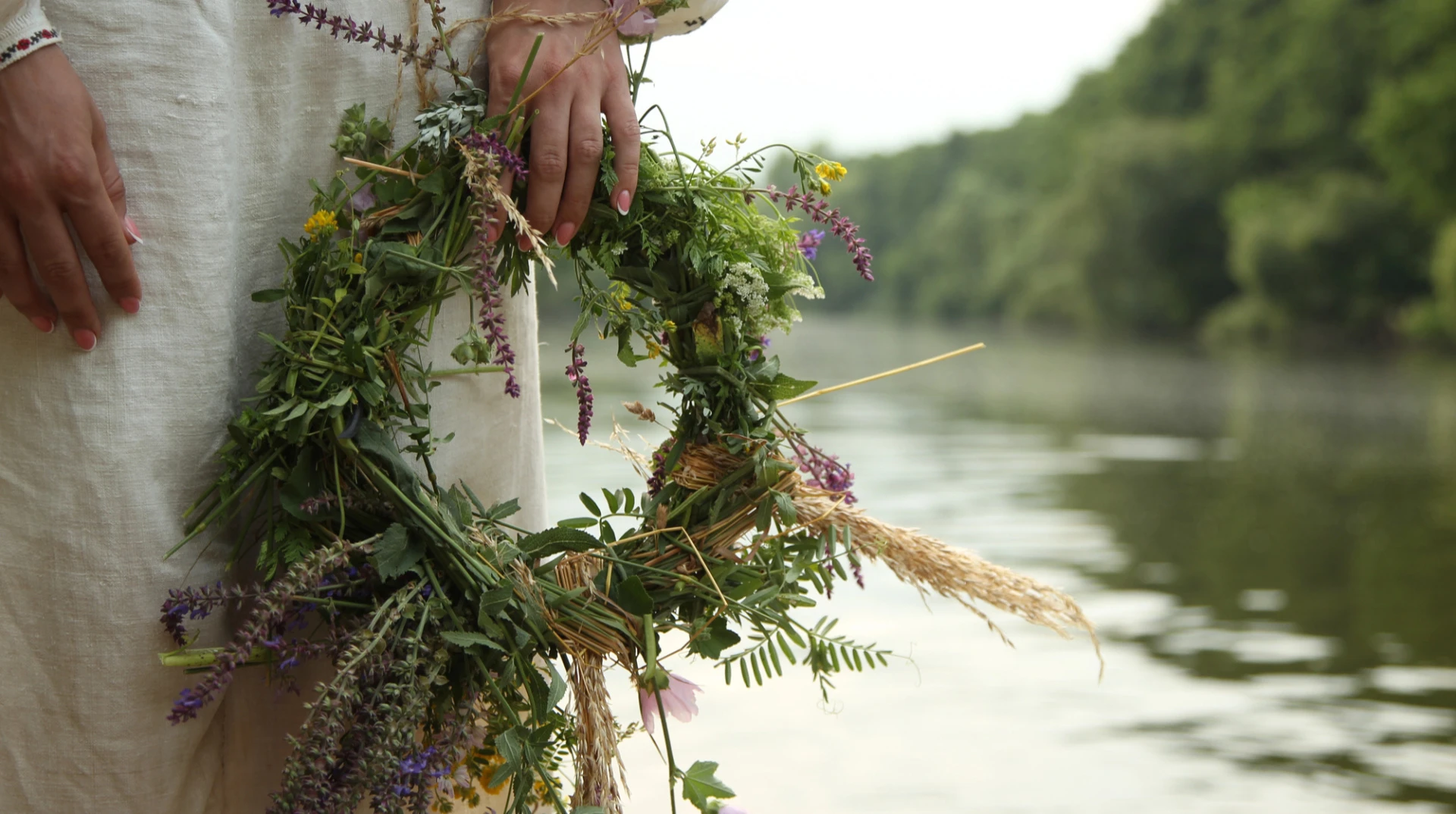
It was common in many regions of Ukraine, particularly in Podillia, the Dnieper region, and Pokuttya, to stick protective plants (nettle, wormwood, St. John’s wort, burdock) in the eaves or near the house. They were also carried with them or thrown into the water to protect themselves from mermaids and other evil spirits.
“They could also use aspen wood or products made from it (for example, an aspen stake or a harrow, behind which people hid while tracking a witch), which were considered a strong talisman against witches,” Anastasia added.
How were mystical manifestations on Ivan Kupala described in folklore?
“Oh, on Ivan Kupala,
The witch of the bulk walked.
Oh, with a motley skirt,
Oh, with a new milkmaid.
The motley skirt fooled the boys,
And the new milkmaid milked the cows.”
And the new milkmaid milked the cows.”
“Oh, on Ivan Kupala,“
Oh, on Ivan Kupala,
The witch of the bulk walked,
The witch of the bulk walked,
With a new milkmaid,
With a new milkmaid,
Previously, we talked about the history of the origin of Ivan Kupala, its place in Christianity, and its significance today.
This site uses cookies to save your preferences and personalize advertising offers. By clicking "Agree", you consent to the use of cookies and accept our privacy policy.